

What are human
rights ?
Our approach to protect, respect, and fulfill fundamental rights
🎯Human Rights are applicable to working environments
Human Rights apply to all facets of life, including the workplace
Human Rights apply to all facets of life, including the workplace




✅ Respecting Human Rights at L’Oréal

As a business, we have a distinct « Responsibility to Respect » human rights throughout our business practices, both within our own operations and our value chains.
This responsibility was formalized by the UN Guiding Principles on Business and Human Rights (UNGPs). It means we must act to ensure our business activities do not infringe upon human rights.
In short: we must do no harm.
Respecting human rights is a moral imperative
But also a strategic necessity to build trust, foster innovation, and build resilient supply chains.


Civil society and consumer expectations, investor pressures, and growing legislation amplify the importance of ensuring human rights are integrated into the way we work.

An increasing amount of legislation around the globe such as the French Loi de Vigilance and the EU’s Corporate Sustainability Due Diligence Directive (CSDDD) require companies to demonstrate they have effective measures in place to address human rights in the way they operate.

Import bans likewise holds companies accountable for the people behind their products, placing bans on products made with forced labor in places like the United States and soon the European Union.
Map of Due Diligence related regulations across the world



🔎 How Human Rights issues may occur within our supply
Case study 01 – Passport or Document Withholding
A factory or plantation management ”holds” the original identity documents or work permits of workers, who don’t have access to them. This effectively prevents workers from leaving, changing jobs, or moving freely.
Which International Labour Organization (ILO) Standard is violated here?
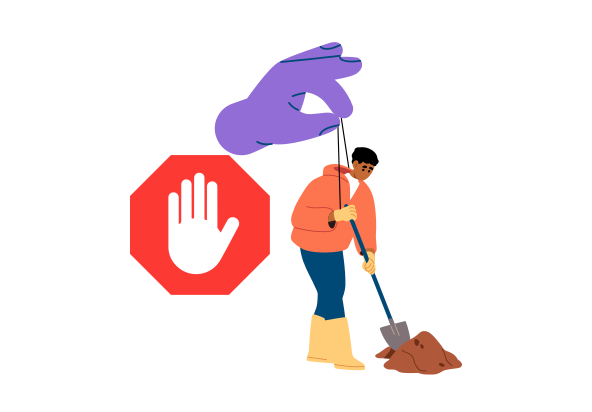
The elimination of all forms of forced or compulsory labour.
Case study 02 – Union Busting
Management actively threatens, demotes, or fires workers who attempt to form a workplace union or engage in collective bargaining.
Which ILO Standard is violated here?

Freedom of association and the effective recognition of the right to collective bargaining.
Case study 03 – Discrimination
An employer assigns the most dangerous or lowest-paid tasks exclusively to workers from certain ethnic minorities, migrant groups, or lower social castes.
Which ILO Standard is violated here?

The elimination of discrimination in respect of employment and occupation.
Case study 04 – Child Labor
Children under 15 accompany family members to participate in agricultural work, in order to increase household income.
Which ILO Standard is violated here?
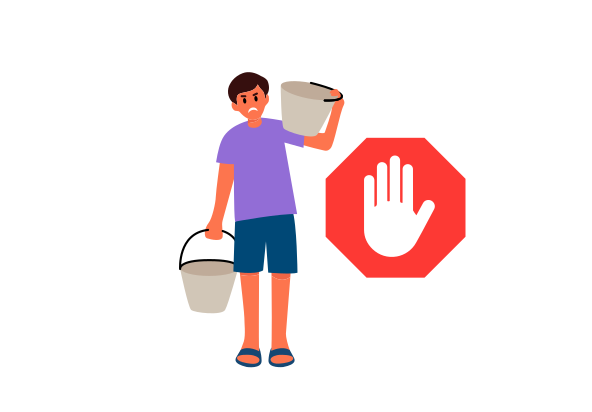
The effective abolition of child labour.
Case study 05 – Debt Bondage via Recruitment Fees
Workers pay fees to recruitment agencies to secure their jobs, taking out loans to cover the costs. In order to pay back all recruitment fees, workers take on excessive overtime.
Which ILO Standard is violated here?
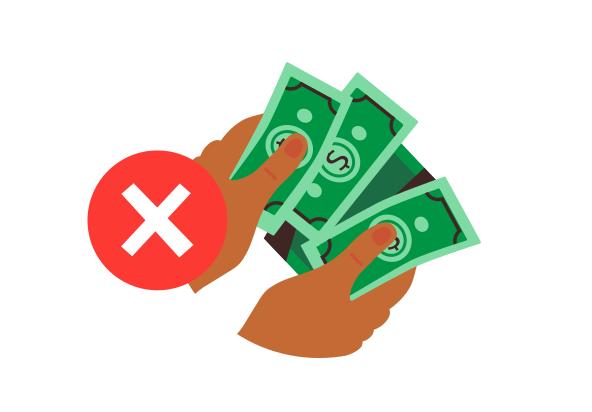
The elimination of all forms of forced or compulsory labour.

As a buyer, you are at the front line in identifying potential human rights risks linked to a product, a service, a supplier, or a sourcing decision.
You can help engage suppliers, gather relevant information, improve transparency, and better understand where risks may exist, whether at tier 1 or deeper in the supply chain.
Your leverage depends on the relationship with each supplier:
Tier 1 suppliers
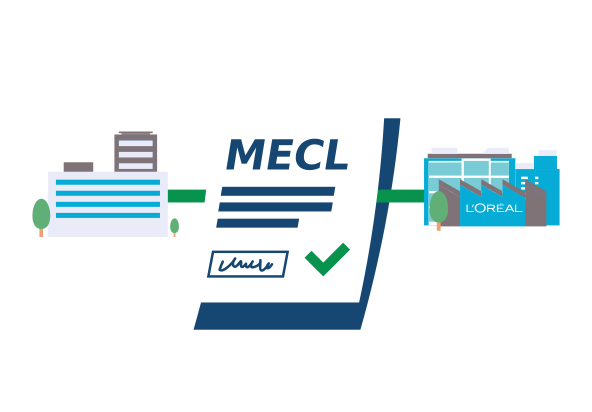
You have a strong influence on direct contractual suppliers. As a contractor, you assure our suppliers adhere to the MECL and work with them to ensure they respect L’Oréal standards.

You have the greatest leverage with direct suppliers, including through positive incentives and longstanding buyer
– relationships, which can lead to a greater will for change.
Your leverage depends on the relationship with each supplier:
Upstream suppliers

Human rights violations can happen at any level of your supply chain; in fact, highest human rights risks are often at the tier-n of a value chain. Though we may not be direct contractual partners to these suppliers, it is our ethical and regulatory obligation to help identify and mitigate risks at every stage.

To the extent possible, we should use our leverage and business relationships to drive responsible sourcing practices throughout entire value chains.
Integrating human rights in all stages of the buyer-supplier relationship
Integrating human rights in all stages of the buyer-supplier relationship




Using the right framework to make sure human rights are respected in your supply chains!
To meet growing legal standards and uphold our values, we act and monitor.
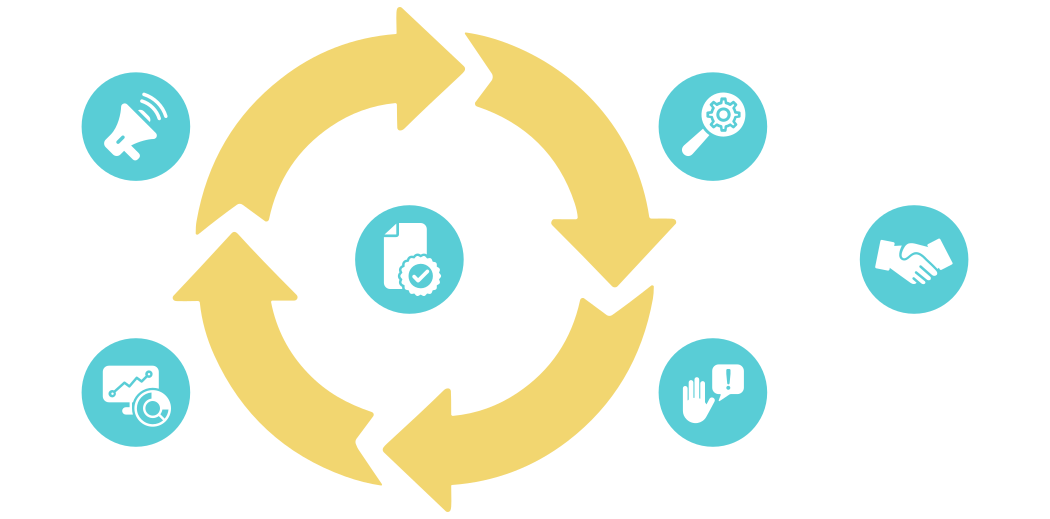
We fulfill our obligations through Human Rights Due Diligence (HRDD): a structured process by which a company demonstrates that it is proactively identifying, preventing, and addressing its potential impacts on human rights in its own operations and its value chains.
Reach out to your category manager to check whether your scope presents adverse impacts on human rights.
It is broken down into six steps:



Use case:
You are conducting a visit to a tier supplier. You see that workers seem to perform dangerous tasks. Your gut feeling and the apparent lack of protection equipment make you feel like workers may have unsafe working conditions.





Immediately document this in your visit report and alert your manager as soon as you can. You may also ask open-ended, neutral questions such as what types of PPE is used for certain tasks or how workers are trained on the use of certain machinery.
Consult with your manager to determine if a deeper assessment, either through a third-party assessment or worker voice survey, is warranted, consulting with Sustainable Sourcing staff if necessary.
During the debrief meeting with suppliers, remind them of the content of the MECL and the importance of respecting human rights at work. Review the importance of continuous improvement and transparency regarding potential challenges to fully respecting L’Oréal’s standards.
Immediately confront the site’s managers, stating your lack of confidence and gut feeling.
End the business relationship immediately if a subsequent third-party assessment identifies inhumane living conditions.
🖥️ Managing a media crisis


Remember, zero risk doesn’t exist: there are always risks in our supply chains; our responsibility is to respond accordingly. The right way:
- Freeze, Don’t Flee: Don’t immediately cancel (which might hurt workers more).
- Alert Key Contacts: Reach out to the Sustainable Sourcing and Human Rights teams immediately.
- Do not immediately contact the supplier: Only communicate with the supplier once contacting the Sustainable Sourcing and Human Rights teams.
✅ So, what are the key takeaways?
Initiating the relationship
Focus: Anticipate and set a clear framework before onboarding.
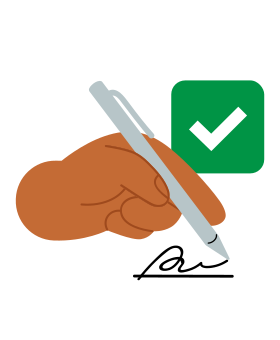
Mutual commitment: have the suppliers sign the Mutual Ethical Commitment Letter (MECL) and receive the social and environmental standards (ASGS) before referencing them.

Assess the partner’s maturity by asking key questions regarding their upstream visibility, internal policies, and main challenges.

When relevant, include specific clauses from the start that require transparency, allow for third-party audits, and mandate remediation if violations are found.
Managing the relationship
Focus: Maintain continuous vigilance on the ground.

Keep your eyes open during supplier visits to spot red flags. If a supplier is suspiciously cheap or refuses access to a specific area, trust your gut feeling.

Deploy field assessments (social audits, in-depth investigations, or worker voice studies) to pinpoint risks.
⚠️ Keep in mind: audits and assessments are risk identification tools, not mitigation measures in and of themselves.

Ensure the supplier has accessible grievance mechanisms in place, and promote L’Oréal’s secure SpeakUp channels.

Monitor risks, track efforts, and review human rights performance directly during strategic Business Reviews.
Ending the relationship responsibly
Focus: React responsibly when a violation is identified.

Collaborate to build a Corrective Action Plan (e.g., paying back recruitment fees, improving working conditions, or providing safety equipment).

If all engagement options are exhausted and the supplier refuses to change, initiate a responsible exit.
⚠️ Keep in mind: refer to the « Responsible Exit Protocol ». We must ensure we do not leave workers unpaid or in a more dangerous position by a sudden withdrawal of funds.

If L’Oréal’s individual influence is weak due to contextual or market reasons, join forces with industry peers and multi-stakeholder initiatives (like the Fair Labor Association) to push collectively for positive change.



Thank you for reading!

